Monday, December 15, 2014

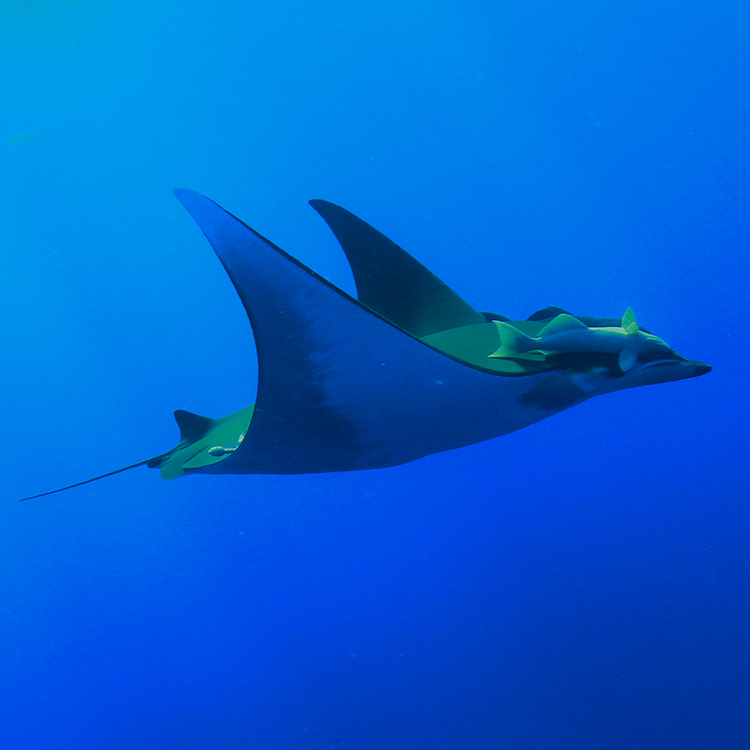
5 Species of Sawfish Now Protected Under the ESA


Effective January 12, 2015, the narrow sawfish (Anoxypristis cuspidata), dwarf sawfish (Pristis clavata), largetooth sawfish (Pristis pristis), green sawfish (Pristis zijsron), and the non-U.S. distinct population segement of smalltooth sawfish (Pristis pectinata) will be designated as endangered species under the Endangered Species Act (ESA) of 1973.

Thursday, November 20, 2014

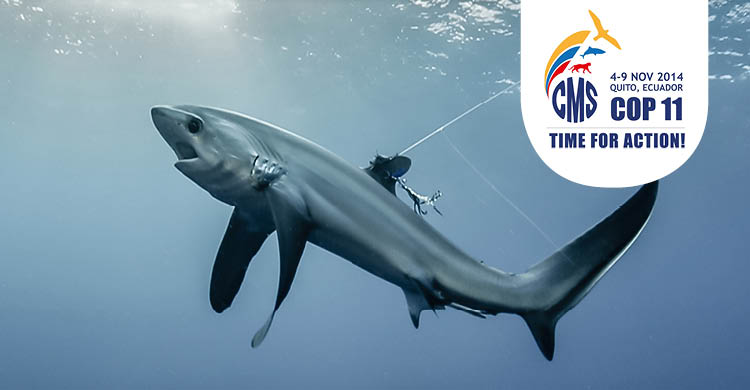
More Protection Comes for Sharks, Rays, and Sawfish (and Other Migratory Species)


The 11th meeting of the Conference of the Parties (COP) to the Convention of the Conservation of Migratory Species of Wild Animals (CMS), administered by the United Nations Environment Programme, concluded on November 9, 2014, in Quito Ecuador, after six days of negotiations.

Wednesday, November 5, 2014

Bangladesh Creates SoNG MPA


On October 27th, 2014, the "Swatch of No Ground Marine Protected Area" (SoNG MPA) was signed into law by the Government of Bangladesh's Ministry of Environment and Forest. This means that fishing and other unauthorized commercial offshore activities are now restricted in the SoNG MPA.

5 Shark Attacks in Egypt (2010) Suggest Cognitive and Human Mediated Drivers


Shark attacks are most often random occurrences, distributed sporadically over time and locations. There are occasional exceptions, however, with multiple shark attacks occurring in the same location over non-distinct periods of time. Experimental evidence on shark cognition has shown that sharks can learn and remember specific locations and images that lead to food.


Friday, October 17, 2014

New Shark Repellent for Pelagic Longline Fisheries

Shark Defense Technologies is developing a new shark repellent, SuperPolyShark, to be used in pelagic longline fisheries.


Friday, October 10, 2014

Call for Public Comment on Skate Management in Alaska's EEZ


The North Pacific Fishery Management Council (Council) has submitted and Amendment (104) to the Fishery Management Plan (FMP) for Groundfish of the Bering Sea and Aleutian Islands Management Area (BSAI). Amendment 104, if approved, would designate six areas of skate egg concentrations, or skate nurseries, as Habitat Areas of Particular Concern (HAPC) in the BSAI.

Indonesia Enforcing Manta Ray Regulations


In February the Indonesian Ministry of Marine Affairs and Fisheries banned the hunting and trading of manta rays throughout the country. Authorities are now cracking down on the illegal sale of their parts along with other protected marine species, including sharks and turtles. Four traffickers were arrested during August and September for selling manta ray gills and snouts, and other animal products, these mark the first law enforcement actions under the new regulations.

Friday, September 26, 2014

South Africa to Test Shark Repelling Electronic Cable

Photo Credit: Institute for Maritime Technology
A new study off of False Bay, South Africa will test the effectiveness of using an electronic field to repel sharks from the area.

Tuesday, September 23, 2014

Sharks International 2014 Keynote: Colin Simpfendorfer


This past June shark researchers gathered in Durban, South Africa for the second annual Sharks International conference. Colin Simpfendorfer, Director of the Center for Sustainable Tropical Fisheries and Aquaculture at James Cook University, presented as one of the keynote speakers on Sharks, Fisheries and the Future. Below you will find the recording of his presentation and a summary of his key points.

Thursday, September 18, 2014

Western Australia Shark Cull Update


In response to seven fatal shark attacks in the past three years Western Australia's government implemented a controversial shark cull which resulted in the death of 68 sharks, from January to April of this year.

New CITES Regulations on International Shark Fishing to be Implemented


On September 14, 2014, regulation on the harvest and trade of six species of shark and ray species, agreed upon by a meeting of the Convention on International Trade in Endangered Species (CITES) last year, will go into affect.

Friday, August 22, 2014

Undersea Fibre Optic Cables Attracting Sharks


Undersea fibre optic cables carry data across continents at up to 1 Gigabit per second, which is around 100 times faster than the older copper cables. In the Pacific, surveillance video of a shark biting these cables has led Google, and it's partner companies, to reinforce the cable with Kevlar-like coatings to prevent damage from shark bites. 

Wednesday, August 6, 2014

Whale Sharks: Juvenile Aggregations in the Red Sea

In 2000, the International Union for Conservation of Nature (IUCN) listed the whale shark as "vulnerable." Credit: Thinkstock.com
A recently discovered aggregation of juvenile whale sharks has been tagged off the coast of Saudi Arabia.

Saturday, July 26, 2014

Shark Repelling Wetsuits

In 2013, Shark Attack Mitigation Systems (SAMS), working in collaboration with the Oceans Institute at the University of Western Australia, released an anti-shark wetsuit design to help reduce the chance of a shark attack on swimmers, snorkelers, and surfers.

Monday, July 14, 2014

Analyzing Climate Change Through Shark Teeth

Photo Credit: Florida Museum of National History
During the Eocene epoch, 53 to 38 million years ago, the Arctic had a experienced a radically different climate than it does today. Instead of an icy tundra, the Arctic supported a temperate forest with brackish water. Now, shark teeth taken from a coastal Arctic Ocean site provides a rare set of marine records that could help us understand what effects current climate change may have on the Arctic's ecosystem.

Monday, July 7, 2014

Devil Rays, The Ocean's Deepest Divers

Credit: Nuno Sa
(WHOI website)
A recent press release from Woods Hole Oceanographic Institution (WHOI) presents recent research on Chilean devil rays (Mobula tarapacana) and their deep-diving habits. 

Tuesday, June 10, 2014

New Super Predator?

http://www.environmentalaska.us/great-white-sharks.html
The tag from a 9-foot great white shark washed up on the Australian coast four months after being attached by researchers.

Thursday, May 29, 2014

Shark/Ray Conservation and Research Bias

National contributions to shark landings (above) and scientific output (below) (source: shark landing data were obtained from the FAO). Modified from Figure 5.2 in : Momigliano, P. and Harcourt, Robert (in press). The Science-Law Disconnect. In: Klein, N. and Techera, E. (eds.) Sharks: Conservation, Governance and Management. Earthscan Series, Routledge

With a quarter of all sharks and rays threatened with extinction, extensive scientific research is needed to promote proper conservation management of these species. The question is, have research efforts been conducted in the right areas?

Thursday, May 15, 2014

Elasamobranch Deep Sea Food-Falls


Animals in the deep ocean rely on detritus (marine snow) as their main source of food. On rare occasions, the remains of large plants and animals make their way to the seafloor, known as a food-fall.

Monday, May 5, 2014

Ethical Shark Fishing?


Last month, a pair of fisherman caught a hammerhead shark and dragged it to shore by the tail as a crowd cheered on. This recent spectacle has raised an old debate over the ethics of extreme angling. Hammerheads are protected by both state and federal law because of their declining numbers. According to fishing regulations the shark should have been released right away, but defining this rule can get tricky. The fisherman who landed the shark claims to have released the shark as quickly as possible. However, even a quick release might not be enough as the stress from the fight can kill the shark. Even if the shark is seen swimming away it can still die later after the release. 

Read the full article by Jenny Staletovich from the Miami Herald

Tuesday, March 18, 2014

Back Boning Costa Rica

Interpol photo
Costa Rica was one of the leading shark fin exporters until they placed a ban on shark finning in 2012. Now, Costa Rican fisherman are using a new technique, called "back-boning", to try and skirt the countrys' ban on shark finning which requires sharks to be brought ashore with their fins still attached to their spinal column.

Monday, March 3, 2014

New Zealand to Require Permits for White Shark Tourism

On Friday, February 28th, New Zealand's Conservation Minister, Dr. Nick Smith, announced that tourism businesses viewing great white sharks will be required to have a permit.

Wednesday, February 26, 2014

World's Largest Manta Ray Sanctuary

Credit: National Geographic
Indonesia has some of the largest manta ray fisheries in the world which support the traditional medicine trade. To help curb recent declines in manta ray populations the Indonesian government is banning the fishing of manta rays within the country's exclusive economic zone (EEZ).

Thursday, February 13, 2014

China's Illegal Shark Industry to be Exposed in New Film


WildLifeRisk recently released the results of an investigation on the slaughter of endangered sharks, particularly of whale sharks, by and industrial plant in China's PuQi township. Throughout their investigation the NGO activists teamed up with director Louie Psihoyos (director of "The Cove") to film their meeting with the slaughterhouse owner, Li Guang.

Friday, February 7, 2014

Shark Trust Promoting Fishermen Education


A new project, to promote sustainable shark fisheries, has begun off the coasts of Cumbria and Lancanshire England.

Earliest Known Shark Nursery


The Bandringa shark, is likely on of the earliest close relatives of modern sharks. Bandringa sharks were a bottom-feeding predator that inhabited a river delta system in what is now the Upper Midwest. Juveniles were only 4-6 inches long with adults reaching 10 ft, with an elongated snout up to half their body length.

Thursday, February 6, 2014

Mexico: Permanent Ban On White Shark Fishing


The Secretariat of Agriculture, Livestock, Rural Development, Fisheries and Food (SAGARPA) has set up a permanent ban on white shark fishing in national waters under federal jurisdiction, which will take affect January 28, 2014. In addition, any sharks that are caught incidentally, whether recreationally or commercially, shall be released back into the ocean. Enforcement of this new policy will be carried out by the Navy and SAGARPA through the National Commission of Aquaculture and Fisheries (CONAPESCA).


Tuesday, February 4, 2014

"New Species" of eagle ray described

Recent taxonomic and molecular work on the eagle ray family has described a new species Aetobatus narutobiei, which was previously thought to be a conspecific of Aetobatus flagellum.

Largest Industrial Slaughter of Whale Sharks Exposed


WildLifeRisk, a NGO based in Hong Kong, has found a factory in PuQi, Zhejiang Province, China that is killing at least 600 sharks each year. It is believed that this is the world's largest slaughterhouse of whale sharks, an internationally protected endangered species.

Monday, February 3, 2014

Shark Culling In Australia

Image Source: Times Live
Following an increase in shark attacks at popular beaches along the Western Australia coast, the government has implemented a "shark management" strategy. They have called for commercial fishing organizations to set up and maintain long lines off the beaches. Any shark larger than three meters will then be  shot and dumped back into the water.  This strategy, is highly controversial and several experts have agreed that it will most likely be ineffective.